The Company
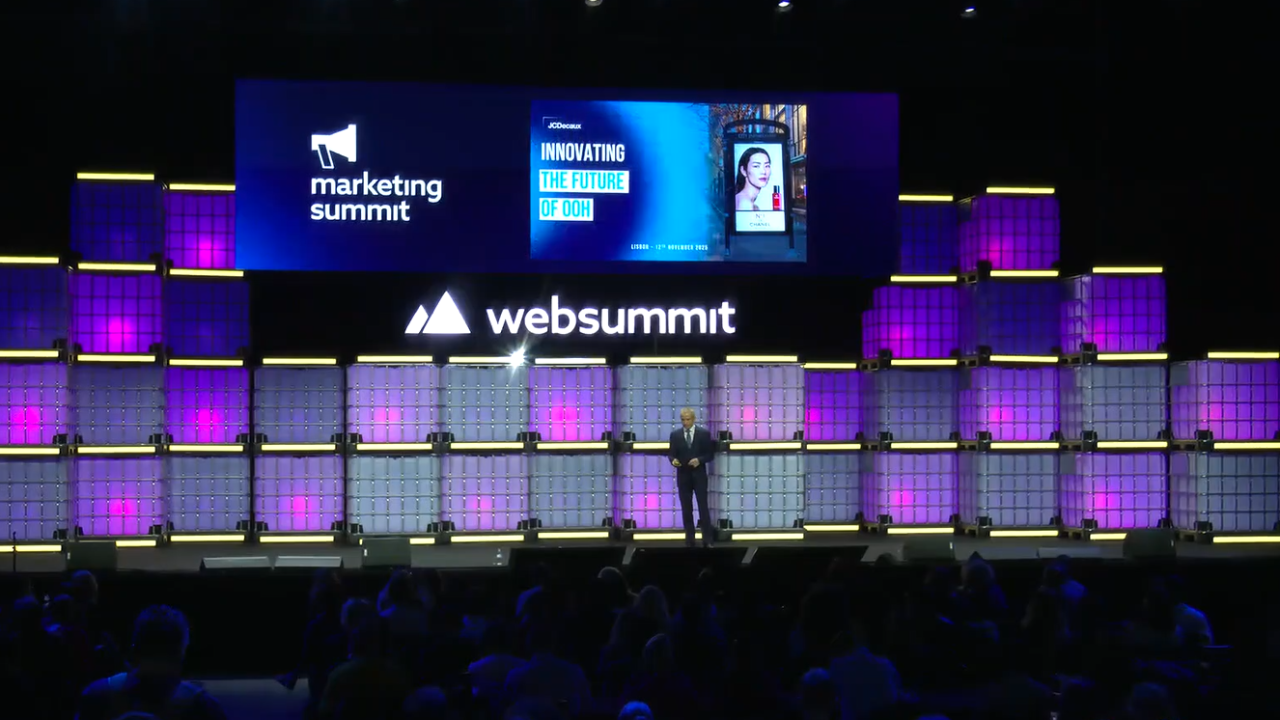
JCDecaux at Web Summit: inventing the future of Out-of-Home
From a visibility media to a sustainable media.
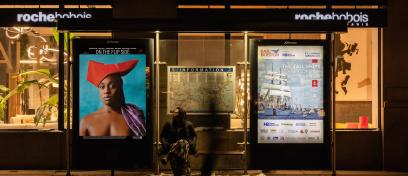
A French family business founded in 1964, JCDecaux was created by Jean‑Claude Decaux, who invented an original model at the crossroads between urban services and brand communication.
Now the world’s number one in Out-of-Home (OOH), JCDecaux is present in almost 4,000 cities of more than 10,000 inhabitants, with over one million advertising panels and a daily audience of 850 million people.
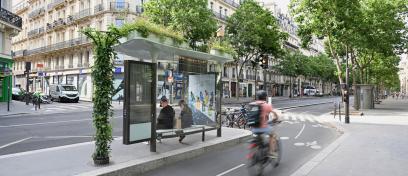
OOH is no longer just a visibility media and a sustainable media. At the heart of local communities, with street furniture and services that are useful to everyone, OOH contributes to the development of territories, helping to create sustainable, pleasant places to live.
Out-of-Home communication serving the city.
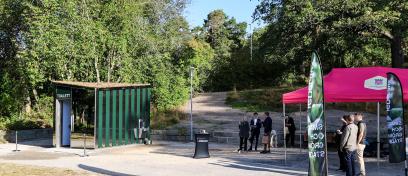
The vision presented in Lisbon is that of a useful, tangible Out-of-Home, serving territories and their citizens. For example, JCDecaux newsstands go beyond their historic role of distributing the press to become places of culture, exchange and local services (cafés, florists, takeaway food), thereby contributing to the dynamism of local life and the strengthening of social ties.
To meet the growing demand for fresh, local products, JCDecaux is also deploying automated kiosks equipped with connected, refrigerated lockers in partnership with local authorities and start-ups in France.
At the same time, street furniture is integrating key functions relating to safety, prevention and resilience: defibrillators, road-safety campaigns with the UN, and now the AWARE project, which will use digital screens as emergency alert supports connected to the Galileo satellite system, in order to broadcast targeted messages in real time, in the right place and at the right moment.
The power of data at the heart of media performance.
The transformation of Out-of-Home is also driven by the fact that data now sits at the heart of every stage of the media journey: reach, precision, responsiveness and impact. Thanks to technology partnerships and an in-depth understanding of urban flows, JCDecaux is able to model audiences, identifying the locations, times and footfall levels that are most relevant. With Pulse, a solution developed by Displayce, peaks in footfall can be anticipated and campaign delivery automatically reallocated, in one click, to the most strategic moments and locations, so that advertisers invest where impressions really matter.
Beyond targeting, the effectiveness of a campaign also depends on creative quality. This is the purpose of Optix, an artificial intelligence tool launched in 2021 and now deployed in 38 markets, which makes it possible to analyse a creative’s ability to capture attention, trigger emotions and be properly understood by the public. The example of BBVA in Colombia illustrates this approach: by testing three creative versions and then simplifying the message and increasing the size of the logo, the brand significantly improved its attention scores by 49% and reduced by 15% the cognitive effort required for understanding. AI is thus becoming a genuine creative co‑pilot to optimise the impact of OOH campaigns.
Sylvain Le BorgneAt JCDecaux, our ambition is clear: we want to remain an experiential medium, rooted in everyday life and at the heart of everyone’s daily experience. By transforming Out-of-Home into a driver of innovation and services, we create value for communities, brands and citizens. The more we strengthen the impact and relevance of outdoor communication, the more we can innovate and offer useful, sustainable and connected solutions that address tomorrow’s challenges.
Group Chief Data Officer
Towards a programmatic, connected and measurable Out-of-Home.
OOH is crossing a new threshold with the rise of programmatic DOOH, real-time contextual activations and systematic measurement of impact. Campaigns can now be triggered on the basis of precise signals (weather, time of day, traffic, events or environmental indicators) and optimised continuously to maximise performance, as illustrated by the Avène campaign in France, activated according to the UV index and proximity to points of sale, and recognised at the Minted Awards.
OOH is also becoming a natural bridge between the physical world and digital ecosystems. Through QR codes, it enables app downloads, online purchases, coupon distribution or immersive augmented-reality experiences, as in the Billy Blue College of Design campaign in Australia, which generated significant engagement. This ability to activate, extend and measure journeys – from awareness through to brand perception – is part of a new generation of OOH.
Useful to citizens, data and AI-driven, and connected to digital channels, Out-of-Home is playing a full part in the development of cities, airports and retail environments, helping to make them ever more pleasant, welcoming and responsible.