Menu Contact us
  • En-Fr

JCDecaux: committed to a sustainable future with our Climate Strategy

At JCDecaux, we are committed to actively participating in the fight against climate change to contribute to a more sustainable and responsible future. Our ambition is to achieve Net Zero Carbon by 2050 across our entire value chain (scopes 1, 2, and 3).

To achieve this, we have defined a decarbonisation trajectory, validated by the Science Based Targets Initiative (SBTi) and audited by an independent third-party organisation.  

Our decarbonisation trajectory, validated by the SBTi: 
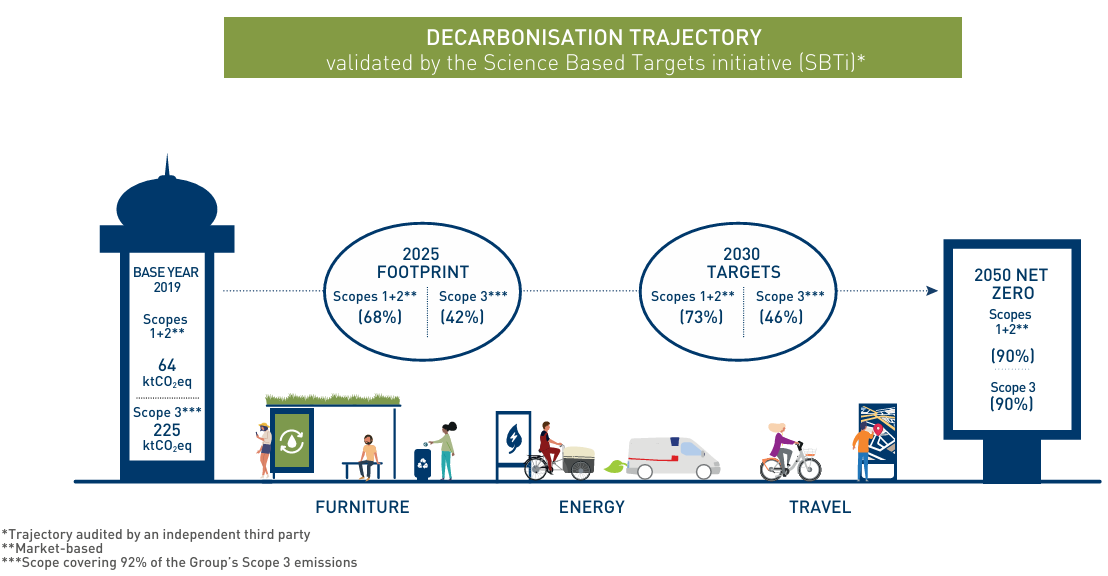
Scope 1: Combustion of fossil fuels (petrol, natural gas, fuel oil) in vehicles and buildings
Scope 2: Electricity and district heating
Scope 3: Fixed assets and services, other fuels, goods transport, financial investments, waste management, personal and business travel 

Learn more about our Climate Strategy

Eco-design: our main lever for decarbonisation

In order to decarbonise our Scope 3, our priority is to reduce the environmental impact of our street furniture, as their production represents the main source of emissions within this area. Eco-design and refurbishment are at the heart of our strategy, serving as key levers in reducing our carbon emissions. We actively engage all our stakeholders to transform our products, services, and operational practices in line with our commitment to contribute to the decarbonisation of regions and promote responsible public and private procurement.

Learn more about developing sustainable furniture

The Eco Design Index: an innovative eco-design tool

In 2024, JCDecaux launched the Eco Design Index, an innovative tool that measures the environmental performance of our products. This tool represents a significant advancement in our eco-design approach, as it enables us to assess the environmental impacts of our products and compare their level of environmental performance within the same category.

A tool for making informed decisions:

The Eco Design Index is much more than just a measurement tool; It is a driving force for more responsible choices:

  • Internally: It guides our teams in the development of solutions with a low environmental impact
  • Externally: It helps clients select and deploy the most sustainable furniture
  • Globally: It enhances and promotes the deployment of eco-designed furniture, contributing to more sustainable living spaces 
     

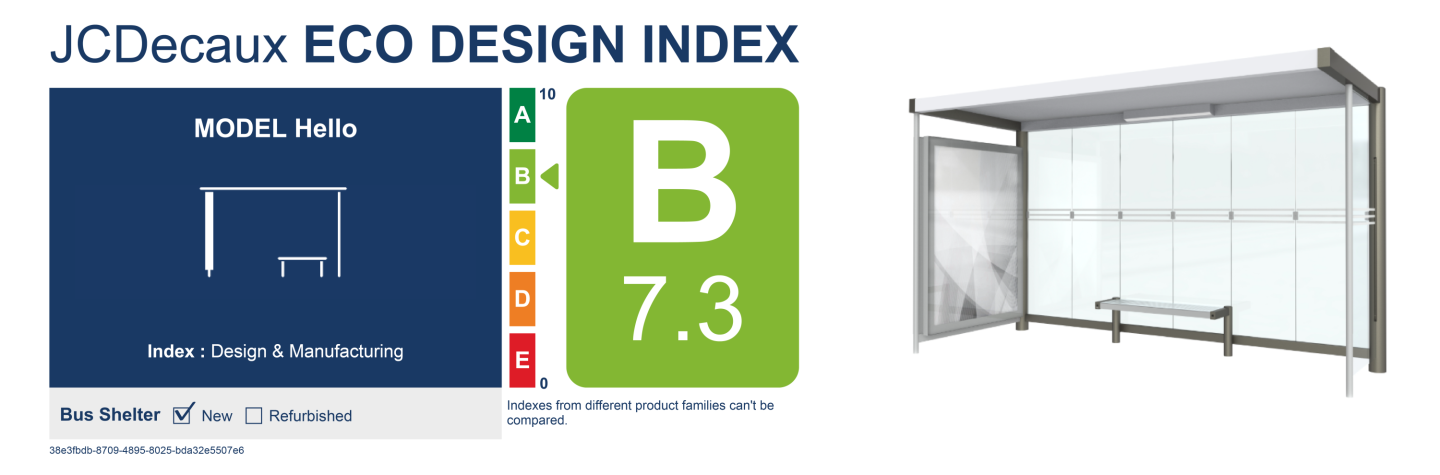
Concrete example: Bus shelter – JCDecaux Design Studio – Hello Model

Discover the performance of our "Hello Model" Bus shelter with its Eco Design Index.  

Eco Design Index - Hello bus shelter

A rigorous and transparent methodology:

Our Eco Design Index is founded on a robust methodology, audited by the independent organisation EY, and perfectly aligned with the European regulatory framework, recognised as the strictest in the world. We leverage our expertise in Life Cycle Assessments (LCA) by incorporating the 16 environmental indicators from the European Commission's EF®* methodology, enriched with data specific to our activities.

* Environmental Footprint

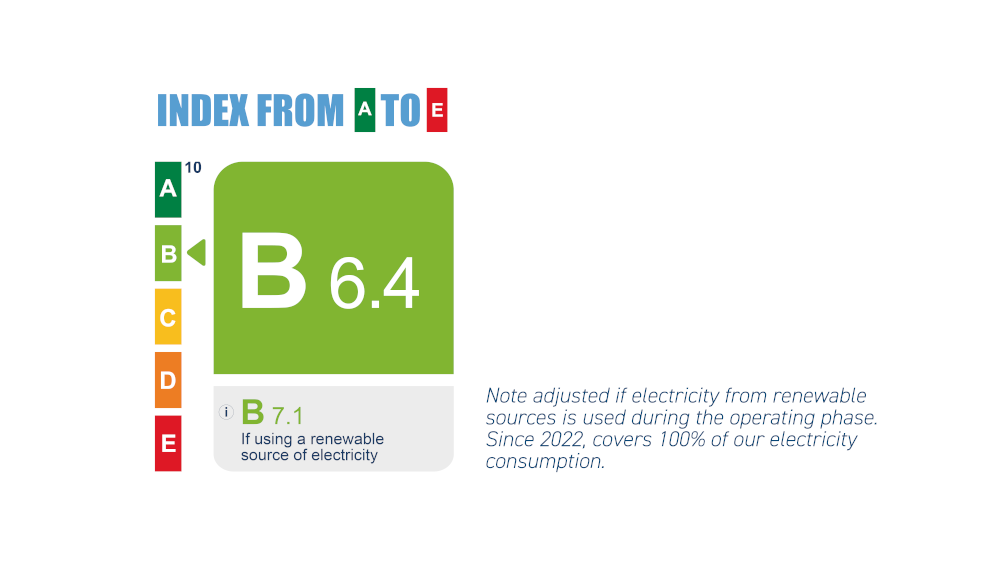
Clear and simple grading: From A to E

The environmental performance of each product is rated on a scale of 0 to 10, then translated into a rating from A to E, with A representing the best rating. 

Eco Design Index rating

To learn more about the Eco Design Index, including details on how ratings are calculated