
In 2024, JCDecaux’s activity generated 21.778 tonnes of waste, including paper and PVC. In view of this volume, waste management is one of the priorities of the Group’s environmental commitment. With a target of zero landfill by 2035 (in countries with suitable facilities), waste management is one of the priorities of JCDecaux’s environmental commitment. Its policy focuses particularly on the recycling of paper and PVC waste, the main types of waste sorted by JCDecaux.

Eric BaumannRecovery of rainwater, cleaning of water-saving furniture, ecodesign of furniture, use of certified paper and vegetable-based inks for our posters, PVC billboard fabrics, recycling of our waste, etc. Our desire to limit our impact on the environment is present at all stages of our value chain.
International Operations Director
Promote responsible waste management through a circular economy
Our objective

Zero waste landfill by 2035
Our result

97%of waste recovered in 2024
Recovering our waste
The practices associated with our various types of waste are regularly reviewed to improve their end-of-life recycling rate. Representing only 1.5% of total waste generated, JCDecaux also ensures that hazardous waste and WEEE (Waste of Electrical and Electronic Equipment) are treated in specialised channels.
Our policy in action
In July 2023, we announced our partnership with Senfa, a subsidiary of the Chargeurs group, to develop a PVC-free advertising fabric. Since September 2023, this new fabric, named "Pearlflex" and co-developed by JCDecaux and Senfa, has been offered on all Extime JCDecaux Airport advertising sites at Paris-Charles de Gaulle and Paris-Orly airports.
French manufacturing, 100% European sourcing, with a weave made from recycled PET yarns and improved end-of-life treatment have enabled the "Pearlflex" fabric to cut its carbon footprint in half.

Pearlflex canvas displayed in Paris airports
Encourage the circular economy
Our business model has many advantages, notably since it is part of the service economy. We provide street furniture designed to last, which – most of the time – remains our property, which is maintained by JCDecaux teams and may be renovated and reused as part of a new contract.
We therefore promote the possibility and necessity of renovating the furniture at the end of the contract to extend their duration of use and thus significantly reduces the environmental impact linked to the extraction of raw materials and the manufacture of new furniture. In fact, well-maintained street furniture can be reused several times and last for around 30 years.
Our policy in action

2.917furniture items were exchanged through The Store in 2024
To support this practice, we put in place “The Store”, an online portal available for all the Group’s subsidiaries since 2013. It enables countries to share their stock of reusable furniture (Abribus® bus shelters, self-service bicycles, etc.) and which can be reserved by other subsidiaries that wish to offer renovated furniture to cities, assuming it meets their requirements.

Foster bus shelter in Angers
Encourage responsible water consumption
Although JCDecaux does not use a great deal of water, it is essential at Group level to work towards the careful management of this valuable resource.
Our objective

Continueto deploy our water policy
Our water management
By collecting rainwater from our installations and using it to clean our street furniture, improving our maintenance methods, raising our teams' awareness of good practice, adapting the frequency of our maintenance schedule particularly in times of high water stress, we can use water in a sensible way, while still maintaining the quality of our services.
Our strategy in actions
RAINWATER
Rainwater furniture cleaning is one of the emblematic actions of JCDecaux, deployed quickly after the company's creation. In France, this measure has been in place for more than 20 years thanks to the tanks installed across the country. This enables the French subsidiary to be self-sufficient in water for the maintenance of its furniture, when rainfall permits and outside periods of water stress.

Cleaning furniture with rainwater
1 LITER FOR 1 BUS SHELTER
Among the various maintenance solutions for reduced water consumption, a new technique was developed in 2024 (1L / 1 Shelter) and is being rolled out, particularly in France for the maintenance of our bus shelters.
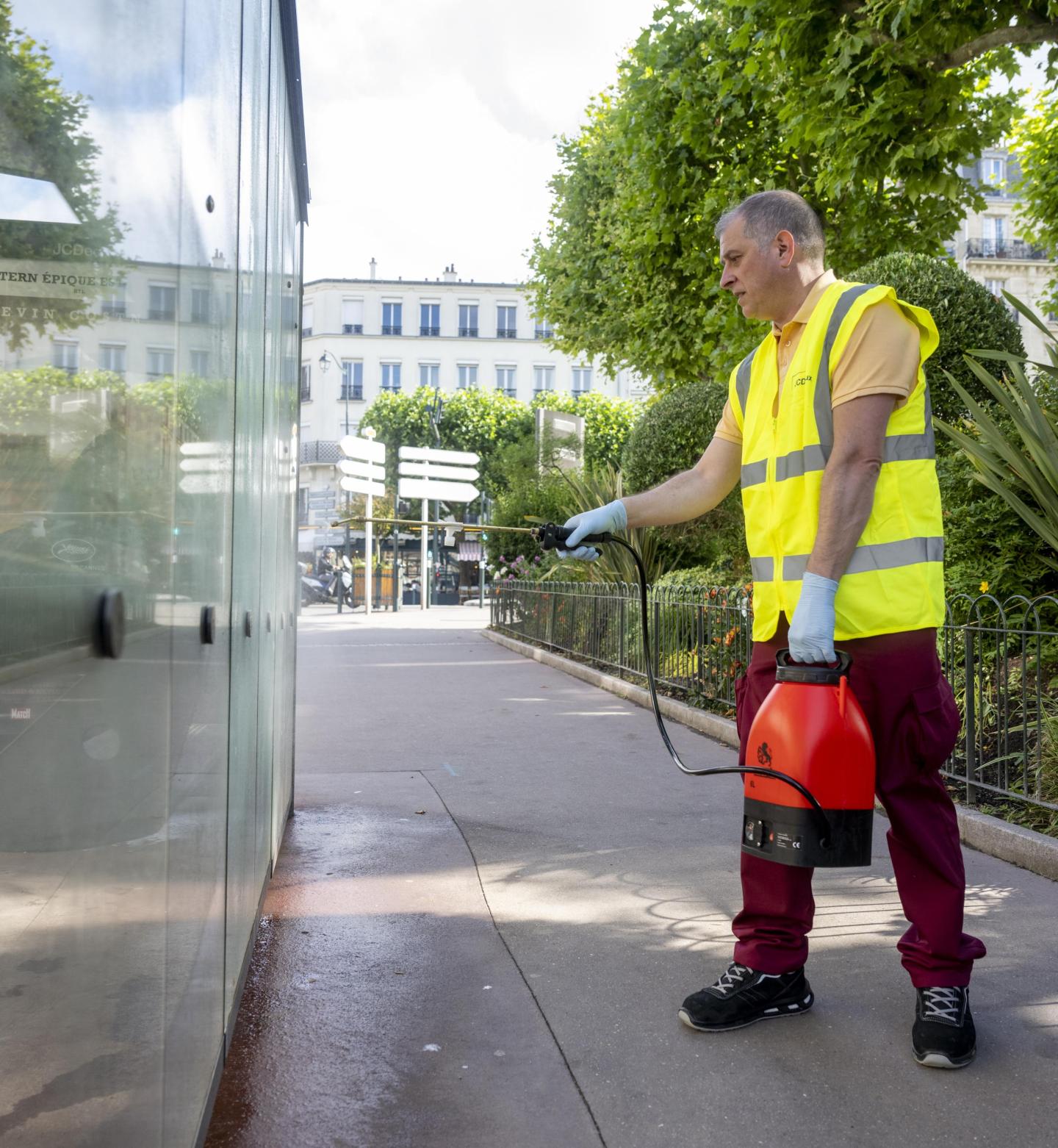
Field agent cleaning a bus shelter with 1 liter of water